The man at Door 13
ReportedSeen: Engine room
A man in white coveralls, linked to crewman John Pedder, who was crushed by watertight door No. 13 in 1966. No named witness.
Hotel · You can stay here
1126 Queens Highway, Long Beach, CA 90802
The Queen Mary is a 1936 ocean liner, retired in 1967 and moored in Long Beach, California, where about 200 of its staterooms are open to guests. Its ghost stories are among the best known in America. Two of them rest on real deaths in the ship's records: crewman John Pedder, crushed by watertight Door 13 in 1966, and Senior Second Officer W. E. Stark, who died in 1949. Others, including "Jackie" in the pool and Stateroom B340, have no record behind them.
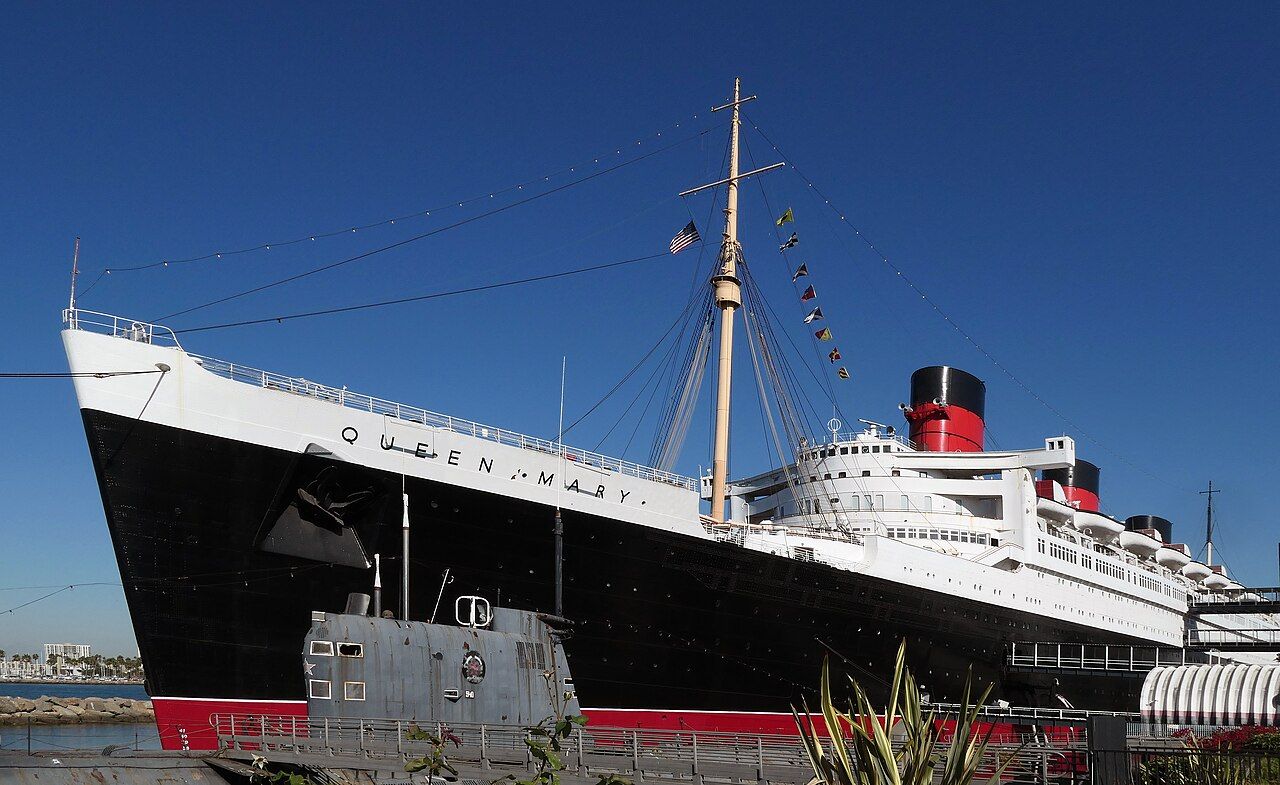
The ship's history is thoroughly documented, and it's listed on the National Register of Historic Places. Some ghost stories rest on real deaths: the ship's archives record that 18-year-old John Pedder was crushed by watertight door No. 13 in July 1966, and a steward's report describes the 1949 death of Senior Second Officer W. E. Stark.
The sightings themselves are thinner. The earliest press account we found, in the Los Angeles Times in 1988, comes from the ship's own archivist and a ghost-tour leader, with no named guest. A 2022 Skeptical Inquirer investigation found no deaths recorded in either swimming pool, and showed that cabin numbers were changed when the ship became a hotel, undermining stories tied to rooms like B340 and B474.
What we checked:Documented history × 7Published account × 1Legend × 2Disputed × 2See each claim
Seen: Engine room
A man in white coveralls, linked to crewman John Pedder, who was crushed by watertight door No. 13 in 1966. No named witness.
Seen: Officers' quarters
The senior second officer who died in 1949, said to make his rounds.
Seen: First Class pool
A woman in a 1960s outfit seen vanishing behind a pillar by an unnamed tour guide.
Seen: First Class pool
A child said to giggle by the pool. No deaths are recorded in either pool.
Seen: B Deck
Lights, taps and bedcovers disturbed in the ship's most famous room. No death is recorded there.
Watertight door No. 13, deep in the engine room, is the center of the Queen Mary's best-known story. The ship's records show that John Pedder, an 18-year-old crewman, was crushed by it on July 10, 1966. In 1988 the ship's archivist, Bill Winberg, told the Los Angeles Times that guests asked about a man in white coveralls seen tinkering in the engine area. No guest was named. He also said Pedder died during an emergency drill, but a 2022 review of the records found the circumstances unknown.
Senior Second Officer W. E. Stark died in 1949 after drinking cleaning acid kept in a gin bottle; the captain's steward wrote a report of it. Ship officials say he still makes his rounds of the officers' quarters, but no witness is named.
The same 1988 article tells of a tour guide who saw a woman in a 1960s outfit vanish behind a pillar at the First Class pool. The guide wasn't named and wouldn't talk to outsiders. The ship now promotes "Jackie", a giggling child said to haunt the pool, but no deaths are recorded in either of its pools.
B340 is billed as the ship's most haunted room, with reports of lights and taps turning on, covers pulled off the bed and a dark figure by the bed. It wasn't rented out from the 1980s until 2018. Author Nicole Strickland has written that Disney-era staff made up the legend to explain why an unfinished room couldn't be booked, and no death in B340 appears in the ship's records.
The tale of two sisters murdered by their father in cabin B474 comes from the psychic Peter James. The crime it echoes happened in Roanoke, Virginia, in 1964, and there was no B474 while the ship sailed. The often-quoted figure of "at least 49 deaths" aboard has no source we could find.
Yes, you can ask for it when you book.
Billed as the ship's most haunted room and reopened to guests in 2018. Call the hotel to book it.
Ask when you book: nothing is guaranteed until the hotel agrees.
The Queen Mary was laid down at John Brown & Co. in Clydebank, Scotland, in December 1930 as hull number 534. Work stopped during the Depression and restarted in 1934; she was launched that September and sailed on her maiden voyage from Southampton on May 27, 1936.
In March 1940 she was requisitioned as a troopship and painted gray, earning the nickname "the Grey Ghost." In July 1943 she carried 16,683 people on one crossing, a record. On October 2, 1942, she struck and sank the cruiser HMS Curacoa off Ireland, and 338 of the cruiser's crew died.
Cunard retired her in 1967, and she arrived in Long Beach that December. She opened to visitors in 1971 and as a hotel in 1972, and was listed on the National Register of Historic Places in 1993. The City of Long Beach owns her. After closing in 2020 and a bankruptcy of the leaseholder, the city took back control in 2021 and reopened her in stages from December 2022.
May 27, 1936
Maiden voyage
October 2, 1942
HMS Curacoa sinks
1949
An officer dies aboard
July 10, 1966
A crewman dies at Door 13
December 1967
Arrives in Long Beach
April 15, 1993
National Register listing
April 2018
B340 reopens to guests
June 4, 2021
The city takes back control
What each story about the Queen Mary rests on. A published account shows that someone reported an experience, not what caused it.
The Queen Mary sailed on her maiden voyage from Southampton.
Senior Second Officer W. E. Stark died after drinking acid kept in a gin bottle.
From a steward's report quoted in the Los Angeles Times.
Crewman John Pedder, 18, was crushed by watertight door No. 13 in the engine room.
The story that it happened during a drill isn't established.
The ship arrived in Long Beach, which owns her.
The ship was listed on the National Register of Historic Places.
A man in white coveralls is seen near Door 13.
Based on the archivist's 1988 statement that unnamed guests ask about him.
A tour guide saw a woman in a 1960s outfit vanish at the First Class pool.
Second-hand, and the guide isn't named.
A girl named Jackie drowned in the pool and haunts it.
No deaths are recorded in either pool.
Stateroom B340 is the ship's most haunted room.
No named witness; one author says staff invented the legend.
Two sisters were murdered by their father in cabin B474.
That crime happened in Roanoke, Virginia, and there was no B474 at sea.
[2] (disagrees)
Yes, you can ask for it when you book.
The most reported areas are: Stateroom B340 (bookable).
It's one of the most famous haunted places in America. Two of its ghost stories are tied to real deaths in the ship's records, but the sightings themselves have few named witnesses, and some popular stories, like the drowned girl in the pool, have no record behind them.
Yes. The ship runs as a hotel, with about 200 staterooms open, including the themed Stateroom B340.
The ship's records show that crewman John Pedder, 18, was crushed by watertight door No. 13 in the engine room on July 10, 1966. A man in coveralls said to be seen nearby is the ship's best-known ghost story.
No drowning is on record. A 2022 Skeptical Inquirer investigation found no deaths recorded in either of the ship's pools.
It's said to be the ship's most active room, but no death there is on record, and one author says the legend began with staff in the late 1980s or early 1990s.
No guest accounts yet. If you've stayed here, yours could be the first.
Share your experiencePage last reviewed November 14, 2026.
Check room prices and availability for your dates.
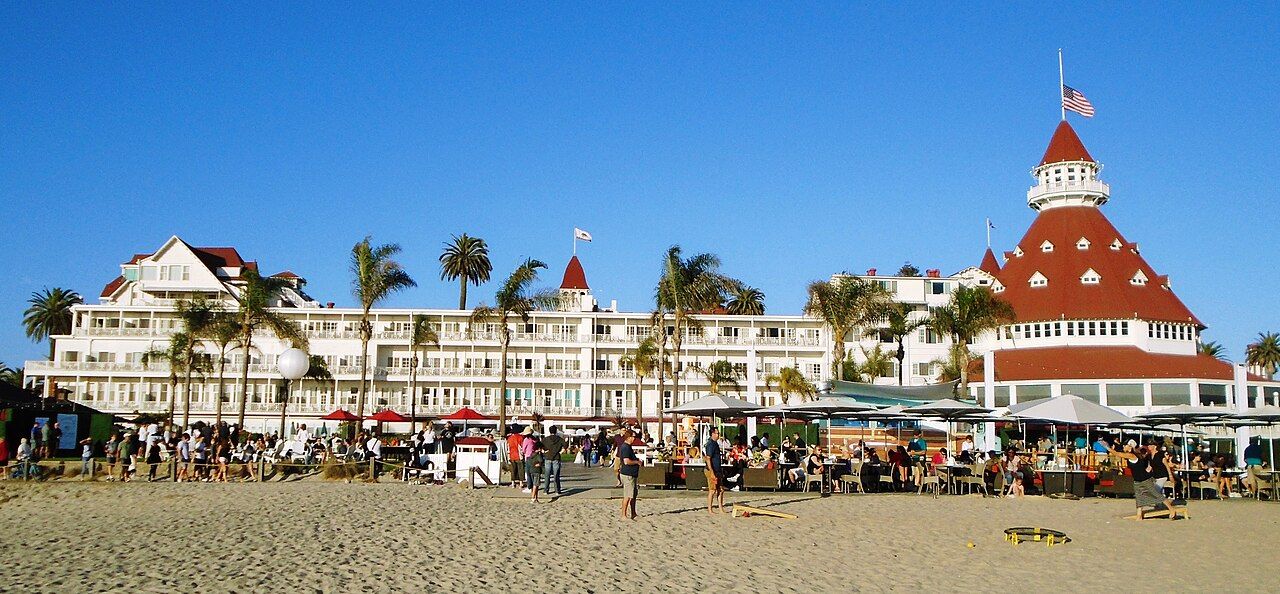
An 1888 Victorian beach resort near San Diego, haunted, it says, by a young woman found shot on its steps in 1892. Her death is on record; the haunting rests on the hotel's own accounts.
Check prices